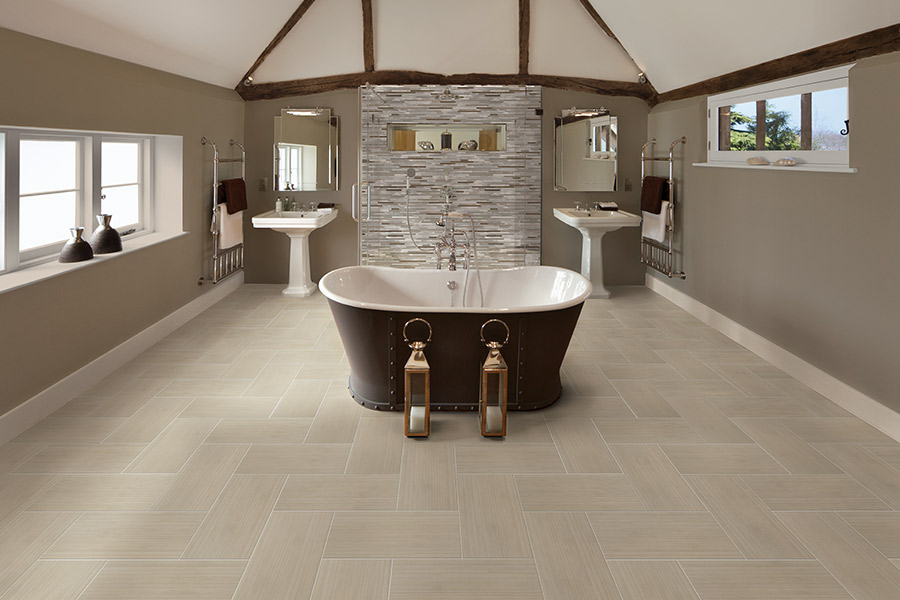
Bathrooms are one of the most demanding environments in any home. Moisture is constant, whether it comes from steam, splashes, or everyday use. If your tile cannot handle that level of exposure, problems will show up quickly. You may see warping, mold, or grout deterioration over time. That is why choosing the right tile is not just about appearance. It is about long-term performance.
At Hardwood Headquarters, we have spent over 25 years helping homeowners across Mid Michigan choose flooring solutions that are built to last. With over 10,000 satisfied customers, we understand what works in real homes and not just in theory. If you are planning a bathroom remodel, here is what you need to know about the best moisture-resistant tile options and how to make the right decision.
What makes a tile moisture-resistant?
Moisture resistance depends on how much water a tile absorbs and how well it is installed. The less water a tile absorbs, the better it performs in wet environments like bathrooms. However, the tile itself is only part of the equation. Proper installation plays an equally important role.
There are three key factors that determine how moisture-resistant a tile will be:
Porosity: Dense tiles absorb less water and perform better in wet areas
Surface finish: Glazed surfaces help repel moisture and prevent absorption
Installation quality: Proper grout, sealing, and subfloor preparation protect against water intrusion
Even the best tile can fail if it is not installed correctly. That is why we always emphasize both product selection and expert tile installation.
What are the best tile options for bathroom floors?
Not all tile materials perform the same in moisture-heavy spaces. Some are designed to handle constant exposure to water, while others are better suited for dry areas. Below are the top tile options we recommend for bathroom floors.
Porcelain tile
Porcelain tile is one of the most reliable choices for bathrooms. It is extremely dense, which makes it highly resistant to water absorption. In fact, porcelain typically absorbs less than 0.5 percent of water, making it ideal for both floors and shower areas.
Porcelain also offers a wide range of design options. You can achieve the look of wood, stone, or concrete without sacrificing durability. Matte and textured finishes are especially popular for bathroom floors because they improve traction.
Why we recommend porcelain tile:
Extremely low water absorption
High durability for daily use
Wide range of styles and sizes
Minimal maintenance requirements
If you are looking for a long-lasting solution that can handle moisture without constant upkeep, porcelain tile is one of the best choices available.
Ceramic tile
Ceramic tile is another strong option for bathrooms, particularly for walls and lighter-use flooring areas. While it is slightly more porous than porcelain, a glazed ceramic tile still provides solid moisture resistance.
Ceramic tile is often more budget-friendly, which makes it a practical choice for many homeowners. It also comes in a wide variety of colors, patterns, and finishes.
Where ceramic works best:
Bathroom walls
Backsplashes
Low to moderate traffic bathroom floors
When installed properly and paired with the right grout, ceramic tile can perform well in bathroom environments while keeping your project within budget.
Are some tiles better for shower walls and floors?
Yes, and choosing the right tile for each surface is essential for both safety and performance. Shower floors and walls have different requirements, so using the same tile everywhere is not always the best approach.
For shower floors, slip resistance is critical. Smaller tiles are often recommended because they create more grout lines, which improve traction and reduce the risk of slipping. Porcelain mosaic tiles are a popular and effective choice for this reason.
For shower walls, larger tiles are typically preferred. They reduce the number of grout lines, which makes cleaning easier and limits areas where moisture can penetrate.
Best combinations we recommend:
Porcelain mosaic tiles for shower floors
Large-format porcelain or ceramic tiles for walls
Textured finishes for added grip in wet areas
This combination creates a balance between safety, performance, and visual appeal.
What tile sizes and finishes help prevent moisture issues?
Tile size and finish can have a significant impact on how well your bathroom resists moisture over time. Larger tiles reduce the number of grout lines, which means fewer opportunities for water to seep through. This makes maintenance easier and helps improve long-term durability.
However, larger tiles are not always ideal for every surface. In areas like shower floors, smaller tiles are better because they improve traction and allow for proper drainage.
Tile finish is equally important:
Matte or textured finishes improve slip resistance on floors
Glossy finishes reflect light and work well on walls
Structured surfaces provide additional grip in wet environments
We often recommend using a combination of sizes and finishes to create a bathroom that is both functional and visually appealing.
How important is grout and sealing for moisture resistance?
Grout plays a major role in how well your tile installation performs over time. Even if you choose a highly water-resistant bathroom floor tile, poor grout selection or installation can lead to moisture problems.
Standard grout can absorb water if it is not sealed properly, which can lead to staining, mold, and deterioration. That is why we recommend upgrading your grout when possible.
Best practices for grout and sealing:
Epoxy grout offers superior moisture resistance and durability
Sealing cement-based grout helps prevent water absorption
Routine maintenance helps extend the life of your installation
A properly installed and sealed grout system ensures that water stays on the surface where it belongs.
Can you make tiles even more water-resistant?
Yes, and the key lies in what is beneath the bathroom floor tile. A complete waterproofing system ensures that moisture does not penetrate beyond the surface.
This includes:
Waterproof membranes
Proper underlayment
Professional installation techniques
When all of these elements work together, your bathroom becomes far more resistant to moisture-related issues. At Hardwood Headquarters, we focus on the entire system, not just the tile itself.
Ready to upgrade your bathroom flooring? Contact us!
The best tile for your bathroom depends on your goals, your budget, and how the space is used.
Porcelain tile offers the highest level of moisture resistance and durability, making it the top choice for most bathroom floors and showers. Ceramic tile provides a cost-effective alternative that still performs well when installed correctly.
The most important factor is choosing a tile that aligns with your needs and ensuring that it is installed properly from the start.
If you are ready to upgrade your bathroom, get in touch with Hardwood Headquarters today! Our tile store in Whitmore Lake, MI, serves Whitmore Lake, MI, Howell, MI, Brighton, MI, Dexter, MI, Ann Arbor, MI, and South Lyon, MI.