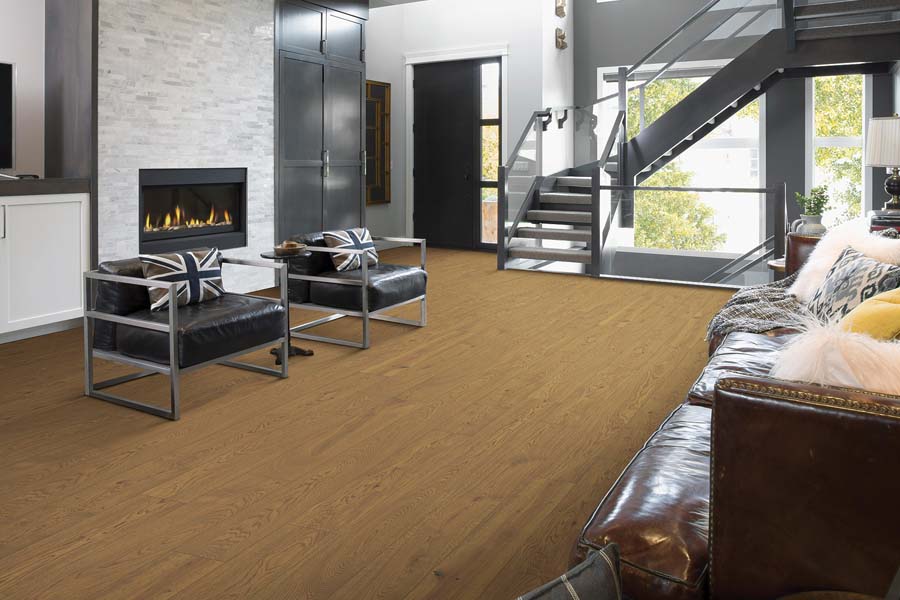
Busy homes put flooring to the test every single day. Foot traffic, pets, furniture movement, and daily routines all take a toll over time. Choosing hardwood floors for these spaces is not just about style. It is about durability, structure, and long-term performance.
At Hardwood Headquarters, we have helped more than 10,000 homeowners across Central Michigan find floors that stand up to real life. With over 25 years of experience, we understand what works in high-traffic environments. If you want hardwood floors that last, here is what you need to know.
What makes hardwood flooring good for high-traffic areas?
Hardwood flooring performs well in high-traffic areas when it combines strong hardness, stable construction, and a durable finish.
Hardness determines how well the floor resists dents. Construction affects how stable the floor remains over time. The finish protects against scratches, scuffs, and everyday wear. When these three elements work together, the result is a floor that holds up under constant use.
If one element is lacking, problems show up quickly. You may see dents near entryways, scratches in common areas, or gaps forming between planks. A well-balanced flooring system avoids these issues and keeps your space looking consistent.
Which wood species are the most durable for busy homes?
The most durable wood species for busy homes include hickory, white oak, maple, and red oak.
These species are known for their strength and resistance to dents. Hickory is one of the hardest options available and is ideal for active households. Its bold grain pattern also helps disguise wear. White oak wood flooring offers excellent durability with a modern look, making it a popular choice for many homeowners. Maple is extremely hard with a smooth appearance, though it may show scratches more easily due to its uniform grain. Red oak wood flooring provides reliable durability with a more traditional style.
Here are some of the best species to consider:
Hickory: Extremely hard and ideal for high-traffic environments
White oak: Durable, stable, and versatile with a modern look
Maple: Very hard with a clean appearance
Red oak: Strong and dependable with a classic style
Choosing the right species plays a major role in how your floors will perform over time.
Should you choose solid or engineered hardwood floors for high-traffic spaces?
Engineered hardwood is often the better option for high-traffic spaces because it offers greater stability and resistance to environmental changes.
Solid hardwood is made from a single piece of wood and can be refinished multiple times. However, it is more sensitive to humidity and temperature changes, which can lead to expansion, contraction, or warping.
Engineered hardwood features a layered construction with a real hardwood surface and a stable core. This design reduces movement and improves performance in areas like kitchens, hallways, and entryways. In busy households, that added stability helps maintain a consistent appearance.
Solid hardwood can still perform well in controlled environments, but engineered hardwood is often the more reliable choice for high-traffic areas.
What finish is best for protecting hardwood floors?
The best finish for protecting hardwood floors in high-traffic areas is a durable, low-sheen option such as aluminum oxide with a matte or satin appearance.
Aluminum oxide finishes are extremely tough and designed to handle heavy wear. They are typically applied at the factory, providing a strong protective layer that resists scratches and scuffs. Matte and satin finishes are ideal because they hide dust, footprints, and minor imperfections better than high-gloss options.
Here are some finish options to consider:
Aluminum oxide finishes: Highly durable and ideal for busy homes
Matte or satin finishes: Help conceal scratches and everyday wear
Oil-based finishes: Offer a natural look but may require more upkeep
Selecting the right finish helps your floors stay attractive with less maintenance.
How do wood flooring plank width and thickness impact durability?
Plank width and thickness impact durability by influencing how wear is distributed and how long the flooring lasts.
Narrow to medium-width planks are often better suited for high-traffic areas because they distribute pressure more evenly. Wider planks can still perform well, but they require proper installation to maintain stability. Thicker boards provide better durability and can be refinished more times, extending the life of the floor.
For engineered hardwood floors, the wear layer is critical. A thicker wear layer provides more protection and allows for refinishing if needed.
Key considerations include:
Narrow to medium-width planks for even wear distribution
Thicker boards for improved durability
A thicker wear layer for engineered hardwood
These details may seem small, but they make a significant difference over time.
What are the best hardwood flooring colors and finishes for hiding wear?
Medium tones, natural finishes, and textured surfaces are the best choices for hiding wear in high-traffic areas.
Very dark floors tend to show dust, scratches, and pet hair more easily. Very light floors can highlight dirt and traffic patterns. Medium-toned floors offer a balanced appearance that helps conceal everyday wear. Natural finishes that highlight the wood grain also help mask imperfections.
Textured options, such as distressed or hand-scraped surfaces, are especially effective in busy homes because they make scratches less noticeable.
Consider these options:
Medium-toned colors for a balanced look
Natural finishes to highlight grain variation
Distressed or hand-scraped textures to conceal wear
Choosing a forgiving color and texture helps maintain your floor’s appearance over time.
How important is professional hardwood floor installation for high-traffic areas?
Professional installation is essential for high-traffic areas because it ensures the flooring is properly prepared and installed for long-term performance.
Even the best hardwood flooring can fail if it is not installed correctly. Proper hardwood floor installation includes subfloor preparation, moisture management, and allowing for natural expansion. These steps prevent issues such as shifting, squeaking, and uneven wear.
At Hardwood Headquarters, our experienced installers focus on every detail to ensure your floors perform as expected. A strong installation protects your investment and helps your flooring handle daily use.
What maintenance habits keep hardwood floors looking new?
Consistent maintenance helps hardwood floors stay in excellent condition and extends their lifespan.
Simple habits can make a big difference. Regular sweeping or vacuuming removes debris that can scratch the surface. Area rugs protect high-traffic zones, while felt pads prevent furniture damage. Cleaning spills quickly helps avoid moisture issues.
Effective maintenance includes:
Sweeping or vacuuming regularly
Using area rugs in high-traffic areas
Adding felt pads to furniture legs
Cleaning spills quickly
Using recommended cleaning products
A consistent routine helps preserve both the appearance and durability of your floors.
Your home for long-lasting hardwood floors in Whitmore Lake, MI
The best hardwood floors for high-traffic areas are built with the right materials, installed correctly, and maintained consistently. When you make informed choices, your floors will continue to look and perform their best for years.
Our wood flooring store in Whitmore Lake, MI, serves Howell, MI, Brighton, MI, Dexter, MI, Ann Arbor, MI, and South Lyon, MI. Get in touch with Hardwood Headquarters today!